


The journey toward sustainable and impact investing is more than just a shift in portfolio allocation. It requires a transformation of investor’s identity and purpose. This transformation encompasses five key dimensions:
- Developing the moral ambition and moral courage to repurpose wealth for good, and forming impact philosophy, mission, and vision.
- Overcoming psychological barriers and fears around impact investing through changing mindsets towards returns and to bravely embrace being a brave amateur impact investor
- Education and joining networks are key enablers to grow in knowledge and relationships, to feel safe and confident to engage impact investing.
- The adoption of a long-term mindset, and ecosystem-oriented approach that leverages collective action and multi-capital (economic, cultural, social, symbolic) for systemic change.
- The navigation of family dynamics to build a multi-generational legacy aligned with impact goals, where family members' collective resources and capabilities drive meaningful system change, and strengthen family social emotional wealth and purpose.
In this identity transition journey, CSP’s Investor's Guide to Impact - How Can Investors Change the World?, Investor guide to multi-capital strategies, Investor guide to Systemic investing, and Insights from the Journeys of Eight Asian Families- Ten Key Actions to Investing for Impact may be leveraged to help guide next generation investors on their journey of investing for impact.
We will use an identity transition journey frame (figure 1) to explore how to overcome these barriers as investors navigate a path that requires both personal transformation and practical adaptation.
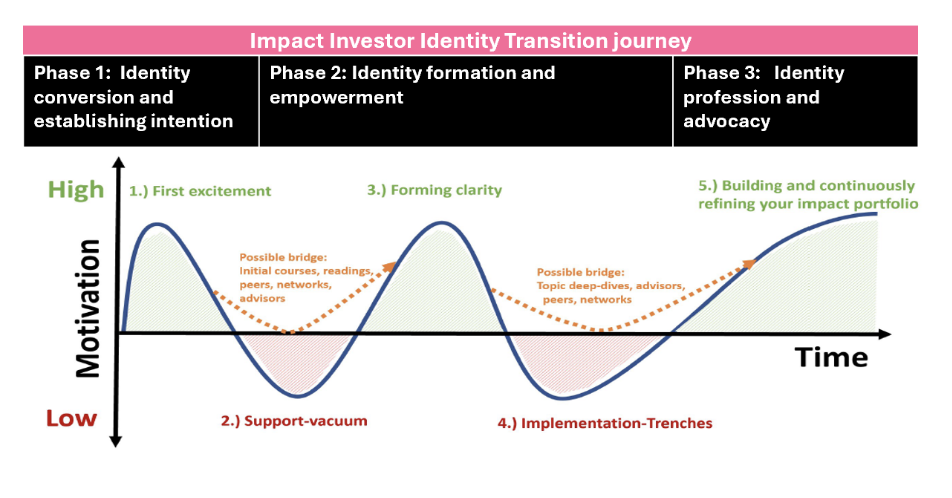
Figure 1: Identity transition journey frame
The metanoia involves a change in one's mindset, values, investment desires, and the ability to act on it. It starts with conversion of the heart and setting intentions, to formation and empowerment and finally to profession and being an advocate for impact investing. The journey involves shifting from fear to empowerment and freedom, from self-centred wealth to wealth activism in service of others and systemic impact.
Education and network formation are enablers in the investment journey. Family relations and family support also play a vital role in helping individuals navigate their investment journeys and align their financial goals with their values. Ultimately, bringing about peace in your heart, family, and world.
A: IMPACT INVESTOR IDENTITY TRANSITION JOURNEY:
This transformational journey encompasses three phases:
- Phase 1: Identity conversion and establishing intention
- Phase 2: Identity formation and empowerment
- Phase 3: Identity profession and advocacy
Phase 1: Identity Conversion (establishing Intentions)
The process of becoming an impact investor involves a significant identity transition. The identity conversion process includes navigating through feelings of guilt, fear, loneliness, and burden, which are often associated with wealth.
- Open dialogue with other wealth holders in safe space
This emotional journey is crucial for individuals to detach from their previous identities and embrace a new, purpose-driven identity as impact investors. In shedding their old skin, next generation wealth holders look to build new networks and like-minded wealth-holders’ friends who can provide them with safety, security and a safe space to have open dialogues and sharing with the challenge of feeling guilt, shame, fear and not knowing how to manage their wealth or investments as well as family dynamics.
- Express your moral ambition and harness your moral courage to act on it
Next, comes a more deliberate reflection and establishing intention to do good for impact. Next generation wealth holders and their families are encouraged to develop "moral ambition," as advocated by Rutger Bregman, to cultivate their talents and harness the moral courage to transform their idealism and take actionable steps to realizing them into positive change, contributing to the greater good.
- Defining the purpose of your wealth and impact
The process of sanctifying and repurposing wealth for good involves deep reflection of the purpose of your wealth and the impact you and your family would like to make. Consequently, to develop your personal impact philosophy, theory of change, vision, and mission.
Phase 2: Identity Formation and Empowerment
The impact investor identity formation and empowerment stage is akin to a come and see, noviceship to dip your toes and foray into this new space. A three-stage process ensues:
- First: A mindset shifts about investment and impact investment
- Second: Engage in enablers of education and network support
- Third: Putting it into action.
First: Mindset shifts about investment and impact investment
- Setting out with a learner's mindset:
As part of learning process, investors implement first investments from the perspective of an R&D project or a training fund. Real-life learning can help you identify and hone your area of interest. Being able to allocate money for a learning pot is a fundamental aspect of embracing learning in impact investing. Trust in your knowledge accumulation, as learning from each investment and its mistakes will empower you and cumulate to your becoming a more confident and resilient impact investor. Impact investing is a form of financial innovation, thus, there is risk bearing in all innovation to advance capacity. Having family support can provide safety net.
- Changing mindsets towards returns. Debunking myths of compromised returns from sustainable and impact investments.
Risk is inherent in all investments. Sustainable investing does not necessarily compromise financial returns; rather, as of all investments, it involves understanding the risk-return trade-off. What is more important is to refocus on maximising and achieving desired impacts.
Many investors mistakenly believe that sustainable investing inherently means sacrificing returns. However, various sustainable investment strategies exist to cater to different risk profiles, offering options that balance risk, return, liquidity, and impact. This flexibility allows investors to approach impact investing with greater confidence and openness.
Investors often have deep-seated fears of not having enough, which makes them hesitant to invest in impact opportunities. The Enough Project (https://www.enough-project.org/) helps wealth holders determine what “enough” means for their lives, allowing them to allocate resources for meaningful investments. Additionally, it is important to remember the power of compound interest in growing wealth.
Second: Engage in enablers of education and network support
- Join networks and build a network. Network formation and support system
Networks provide invaluable support and shared knowledge that are essential for new investors Joining networks and communities is a key enabler in the learning and growing in impact investing. It benefits are many folds.
- Being with like-minded wealth-holders provide a safe space, support, comfort, and guidance on sharing wealth transference experience and what to do with wealth and investment.
- Learn with peers and do due diligence together to address issues of green- and impact washing
- Pass deals to one another
- Come as a small group to invest together helps to spread the risk, for all to learn.
- Pool resources together for a polycapital and systemic investing approach to scale impact and make it real.
- Being in a community help to collectively build and contribute to a thematic area of impact.
- Share tips and support one another in dealing with family dynamics
- Joint family’s investment makes it easier to convince parents and founders to support impact investing
Community and network building promote collaborations, shared learning, and support for one another. It encourages open dialogues in a safe space, and you can join networks that cater to your specific needs or thematic interest or area of impact. For example, UBS Global Wealth Report (2024), states that women will inherit a sizeable portion of the US$83tn wealth transfer from baby boomers over the next 20 to 25 years, next generations women can join women’s inheritor network, or a next generation network
- Engage in education, and continuous learning.
Embracing learning is a vital component of the journey in impact investing. Learning can come from formal purpose driven finance education in sustainable finance or topics in impact investing, or through informal learning and sharing with peers in networks. Investors seek more guided transition program for open dialogue wealth, wealth transfer, and legacy. There is also a need gap for more purpose driven finance education.
Furthermore, self-motivation plays a significant role in this learning process, it is important to keep the eye on the prize of impact to keep faith and hope. Listening to success stories from like-minded people in thematic interest and impact investing, will help you to stay motivated. Overall, the combination of education, networking, and self-motivation creates a robust framework for overcoming fear and embracing the learning necessary for successful impact investing
Third: Putting it into action
- Start as an amateur but be serious and committed to it
You do not have to be an entrepreneur or launch a fund. You just must start somewhere. Be an amateur, start small but be serious and committed to it. Gather your support network of family, friends, and other wealth holders, and engage the right advisors and investment team to guide you. Collaborate in small groups to invest, learn together, share risk, conduct due diligence and collective knowledge and contribution to support thematic impact.
- Allocate a fraction of wealth to try it out
In deciding how to allocate your wealth to impact investing, here are some possibilities
- Carve out a small portion from your current investments for impact investing
- Create 2 portfolios: 1 for maintaining current lifestyle, 1 for impact investing
- Knowing what is enough, and the reassurance of compound interest rate.
- Start in areas which you are passionate or excited about
Phase 3: Identity Profession and Advocacy
- Advocacy and role model
The impact investor transformation and transition journey are not just a personal but a communal one. As you grow to become a more confident impact investor, you start to take leadership to become an advocate and role model.
- An ecosystem approach: Multi-capital and Systemic investing
Having gained knowledge and overcoming your fear of impact investment, you may start to take on a more holistic, multi-capital and system approach to impact investing. To have more control over your impact, and to make your impact real, invest in systems that has long term effect and outlive you to create lasting change.
Driving systemic change requires more than financial capital to use all your
endowed assets, talents, and connections to drive meaningful change. Integrate impact investing with your broader engagement efforts, such as philanthropy and business, to deploy your impact capital across the spectrum and using innovative financing like recoverable loans, catalytic capital, and blended finance.
Adopt a multi-capital approach to leverage your intellectual, human, social, and capital to maximize the influence of your networks and experiences, achieving your desired impact.
- Make your impact real
To have more control over your impact, and to make your impact real, invest in systems that has long term effect and outlive you to create lasting change. Systemic investing and poly-capital approach allow you to exert more points of influence for impact. This approach can also unite your family around shared goals and pooling collective resources for family impact.
To be more empowered to assess and deal with potential green or impact washing:
- Conduct due diligence with the community or network of investors in sharing collective knowledge
- Pass deals to one another in the trusted network.
- Invest in deals that are already listed in credible impact fund list. Investment opportunities in impact investing have matured significantly, with established impact funds now offering proven five-year track records and mainstream financial institutions increasingly launching credible impact products. This growing ecosystem makes finding and validating impact deals much more accessible for new investors.
- Alternatively, instead of specifically seeking impact funds, consider investing in specific thematic funds like healthcare or clean tech. Then, develop and use your own internal compass to assess what is impact and which has impact.
B: GETTING THE FAMILY BUY IN AND OVERCOMING FAMILY RELUCTANCE IN IMPACT INVESTING
- Managing family dynamics, getting family buy in.
Family support provides a safety net for individuals but also fosters stronger familial bonds and shared values through collaborative engagement in impact investing Engaging family in discussions about values and impact goals strengthens the social emotional wealth of the family.
Getting the family buy in and overcoming family reluctance in impact investing is essential for establishing a shared purpose to creating a unified approach to wealth management, wealth transfer, and legacy planning. Whilst difficult, it is important to have the grace to engage in open dialogue with family to share and build a common inclusive family values and impact goals. To overcome resistance, have open dialogue to help the family and parents to see the relevance or why, where, and how they can help in impact.
Highlight the importance and responsibilities of stewardship of resources for the next generation, and the need to care now. Underscore intergenerational justice and the moral obligation of current wealth holders to ensure that their actions today do not compromise the well-being of future generations.
- Come and see, interact, and witness other intergenerational families impact investing
Be involved as a family in impact investing networks and events. This will break barriers and open the minds of parents to see how other families are also engaged in sustainable and impact investing and the intergenerational involvement. Example: going for impact investing festivals such as Katapult Future Fest in the Netherlands.
- Long term view, multi-capital, and systemic approach
Sitting down as a family to share multigenerational family values and impact goals can help draw up how the family can use an asset-based approach to pool their collective multi capital together to engage in impact investing for systemic change.
Help your family recognize how they can contribute to impact beyond just financial support by adopting a multi-capital approach. This means leveraging not only financial resources but also activating the entire family’s collective assets and networks in business and investments, intellectual, human, social, and political capital to drive meaningful impact together, to influence and create systemic change. By doing so, your family can enhance their social and emotional wealth while benefiting society and their financial well-being. Ultimately integrating family values into their impact driving the family legacy.
The transformation to impact investing represents a profound metanoia - shifting from fear and guilt about wealth to empowerment and purpose, from self-focused preservation to driving systemic change. This journey, supported by networks and family engagement, transforms impact investing from merely a financial strategy into a powerful expression of values and legacy across generations. The result is not just broader impact, but a renewed sense of purpose in wealth stewardship. Completing this impact investor transition journey to overcome these barriers will bring you to the motivations to impact investing of positive impact, value alignment, family legacy/engagement, and returns.
References:
- Andersen, K., Jay, J., Paetzold, F., & Khan, H. (2025, September 15). Investor’s Guide to Multicapital Strategies. Center for Sustainable Finance & Private Wealth
- Baghai, P., Howard, O., Prakash, L., & Zucker, J. (2020, July 29). Women as the next wave of growth in US wealth management. McKinsey & Company.
- Erickson, B., Tantia, P., & Tedesco, N. A. (2024, July 31). Overcoming psychological barriers to giving. National Center for Family Philanthropy / Arabella Advisors.
- Heeb, F., & Kölbel, J. (2021, September 23). Investor’s Guide to Impact: How can investors change the world? Center for Sustainable Finance & Private Wealth.
- Koh, J., & Yum, P. (2025). Insights from the journeys of eight Asian families: Ten key actions to investing for impact. Center for Sustainable Finance & Private Wealth / The ImPact
- Koh, J., Payiatakis, D., (2025) Starting your family’s sustainability journey, Centre of Sustainable Finance and Private Wealth, Barclays
- Koh, J., Payiatakis, D., (2025) Setting your sustainable investing ambitions and aims, Centre of Sustainable Finance and Private Wealth, Barclays
- Koh, J., Payiatakis, D., (2025) Three sources of obstacles to sustainable investing, Centre of Sustainable Finance and Private Wealth, Barclays
- Koh, J., Payiatakis, D., (2025) Strengthening your family with the 3Cs framework, Centre of Sustainable Finance and Private Wealth, Barclays
- Tews, R., Jay, J., Andersen, K., & Paetzold, F. (2025, March 10). Investor’s Guide to Systemic Investing. Center for Sustainable Finance & Private Wealth.
- UBS. (2024). Global wealth report 2024. https://www.ubs.com/us/en/wealth-management/insights/global-wealth-report.htm
- https://www.buildingbridges.org/the-great-wealth-transfer-webinar-next-gen-leaders-paving-the-way-for-impact/
- https://rutgerbregman.com/sma
You might also be interested in
Insights
Starting Your Family's Sustainable Investing Journey Part 4: How Do You Bring Others On The Journey?
The 3Cs framework: communication, connection, and commitment aims to help families find common ground and move forward together.

Insights
Starting Your Family's Sustainable Investing Journey Part 3: What Obstacles Will You Encounter?
Internal mindsets, family dynamics, and social norms are the real obstacles to sustainable investing. A guide on how to spot them.

Insights
Starting Your Family's Sustainable Investing Journey Part 2: Where Do You Want To Go?
Learn how to set clear ambitions and use the UN SDGs to define where you want your sustainable investing journey to go.
